SASSIE: Water Sampling Drone
A semi-submersible system for automated environmental sampling
A semi-submersible system for automated environmental sampling
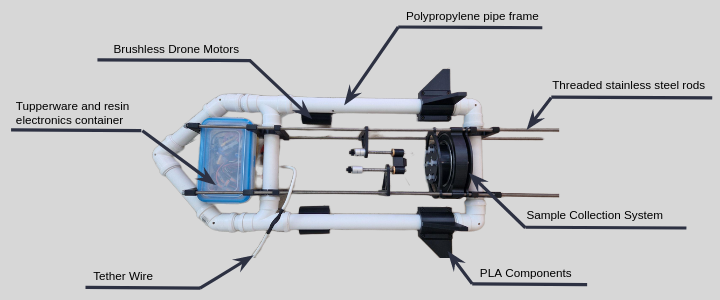
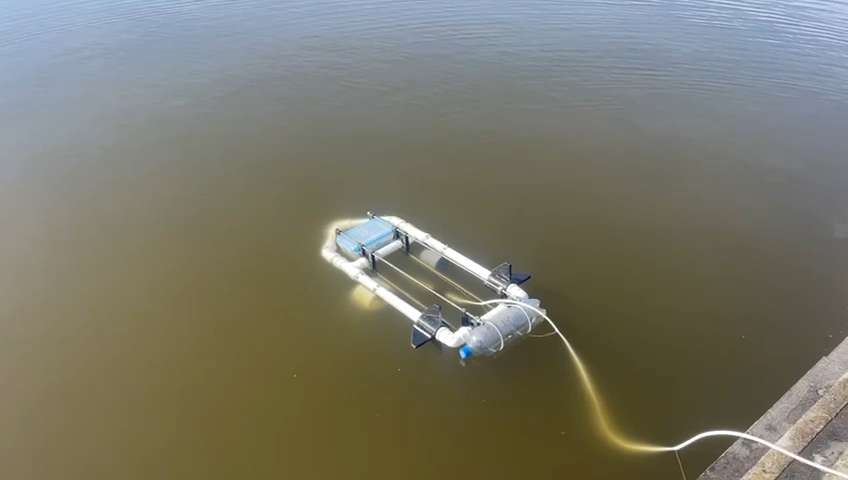
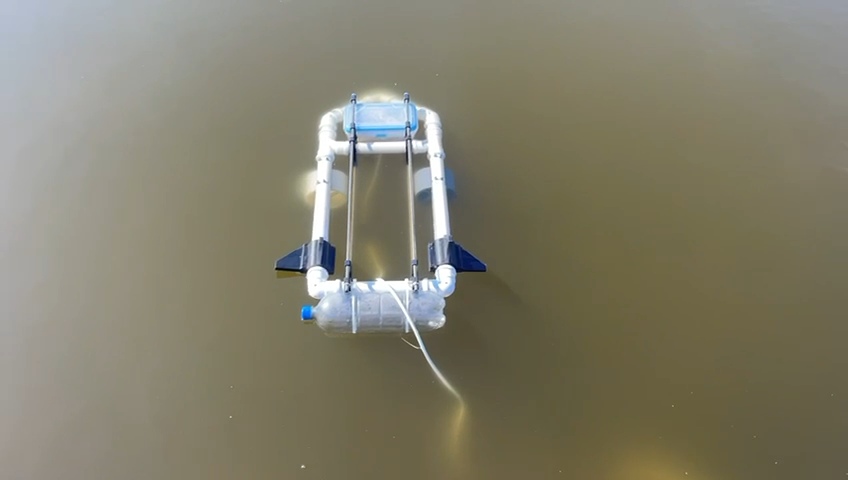
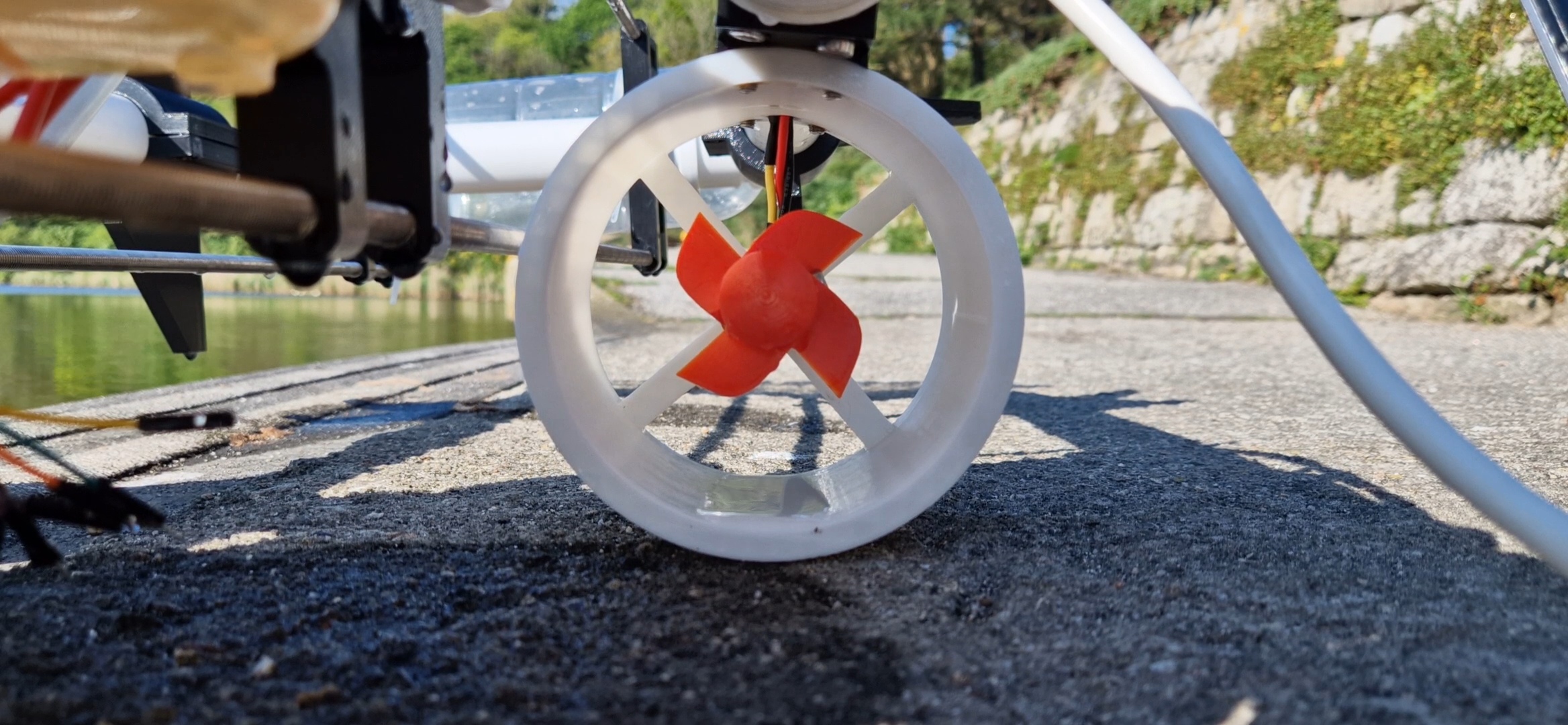
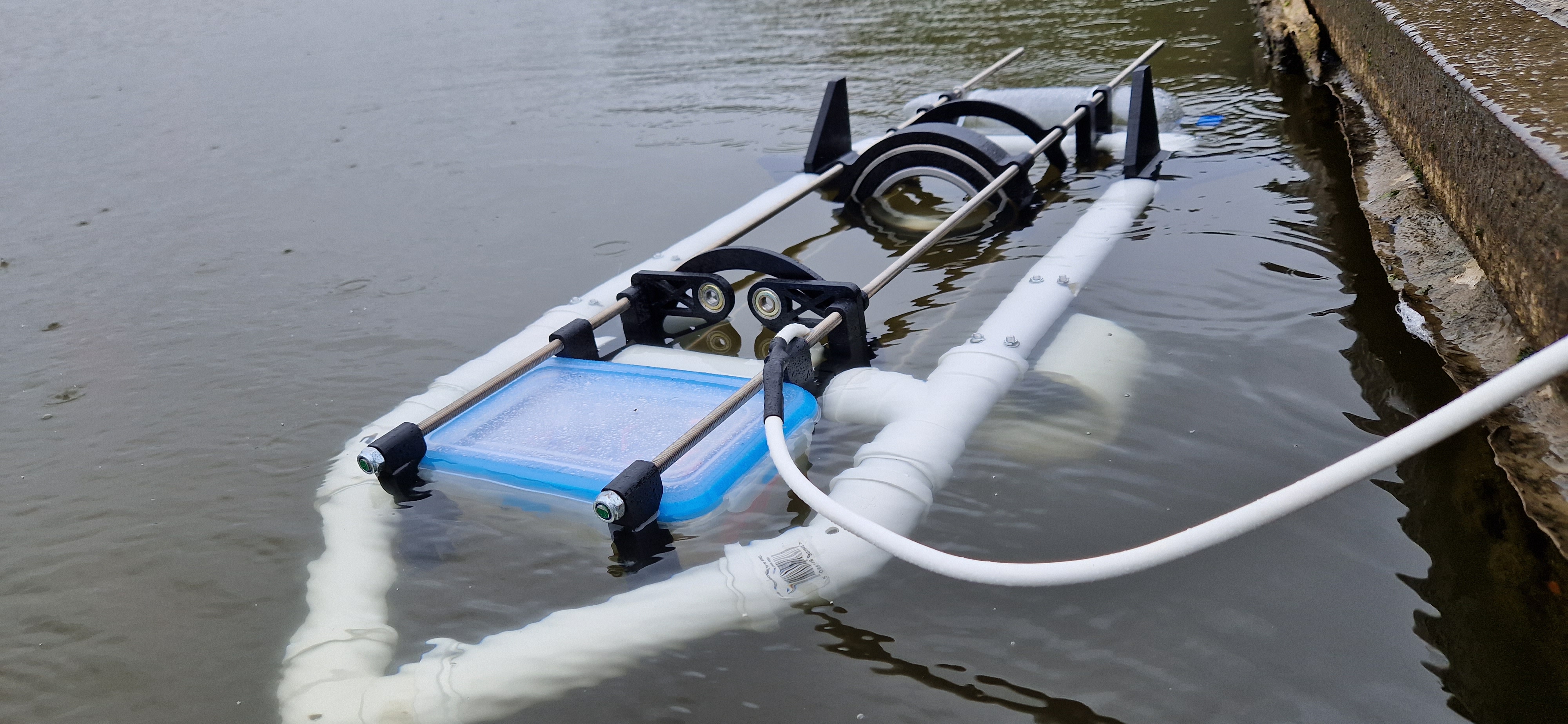
The Semi-submersible Array and Sampler for Sewage Impact on Ecosystems (SASSIE) was developed as a final-year university project. Designed by the SASDEV team—composed of two robotics engineers (myself included) and supported by three computing students—SASSIE addresses the need for safer, automated water sampling in coastal areas affected by sewage discharge.
The prototype successfully demonstrated the core sampling cycle in shallow water. While future iterations aimed to enable full submersion and more advanced autonomy, this MVP (Minimum Viable Product) laid the foundation for safer, remote environmental monitoring—removing the need for manual collection by volunteers.
As a part of the project, we also had to develop a marketing and business management strategy. This included creating a business plan, marketing materials, and a pitch deck to present to potential investors and stakeholders. The goal was to demonstrate the commercial viability of SASSIE and its potential impact on environmental monitoring and water quality management.
We then took these pitches to Plymouth Marine Labs, where we presented our project to a panel of experts in marine biology and environmental science. The feedback we received was invaluable, helping us refine our approach and consider the practical applications of SASSIE in real-world scenarios.
At the end of the project I developed a trailer for SASSIE to showcase the project and its capabilities. This video was used in our presentations and marketing materials, helping to communicate the vision and potential of SASSIE to a wider audience:
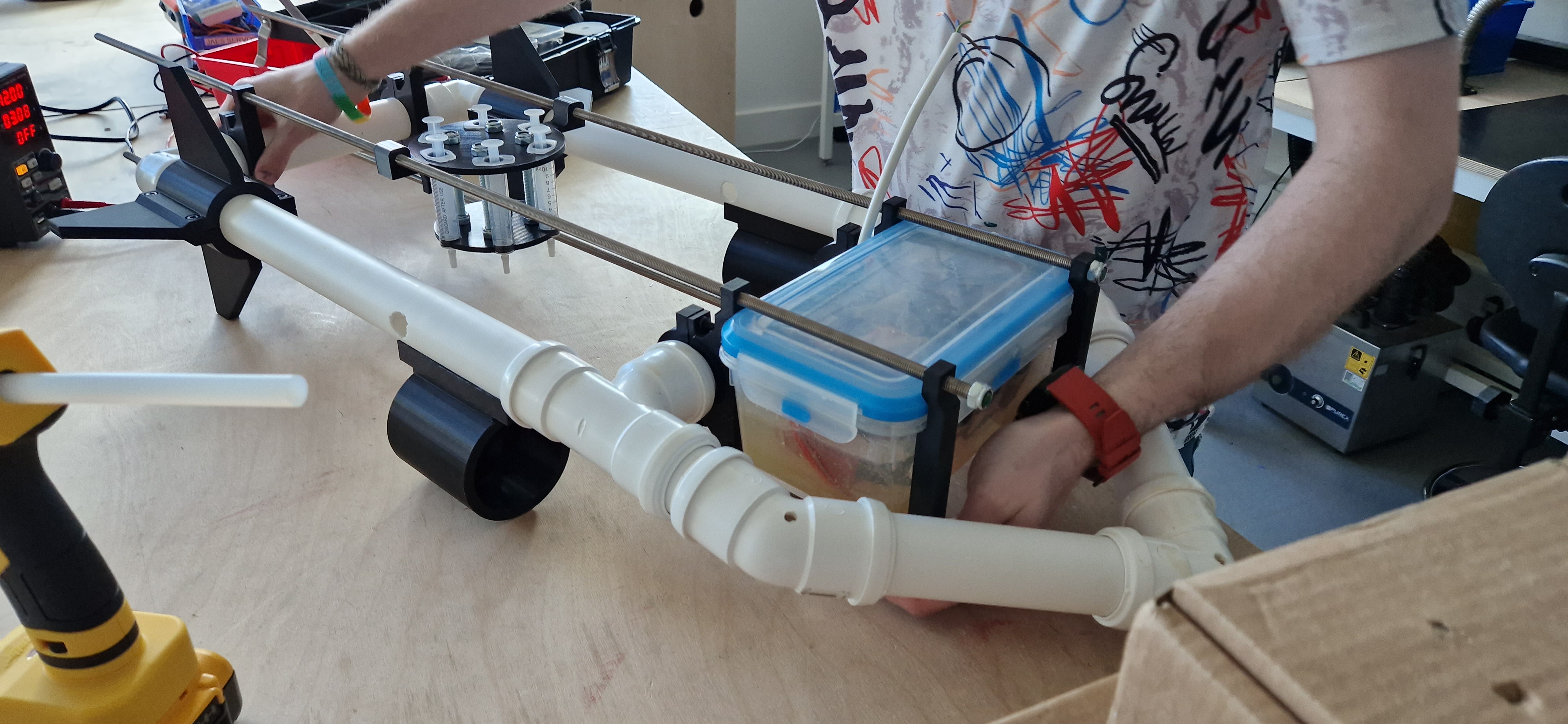
The main purpose of SASSIE was the collection of sewage sample at both surface level and depth. To perform this action we had to build a custom sample collector, to do this we utilised medical syringes as they are cheap, easily purchasable and versitile.
The collector worked as a revolver like mechanism that allowed for multiple samples to be collected before having to return to the surface. The collector was actuated by a servo motor that rotated the revolver and a screw drive to pull the syringe plunger back to collect the sample.
The collector could be bolted to the chassis of SASSIE and was designed to be easily removable for cleaning and maintenance. This also has the advantage of leaving the submersible as a modular kit which can have other components added to it if needed.
Below is a video of the collector functioning inside of the lab:
When it came to testing the SASSIE prototype in the local waters, we found that there were no clear guidelines for unmanned aquatic drones in UK coastal waters. To address this, we drafted a set of safety and operational regulations to guide deployment. This document outlines the necessary precautions and procedures to ensure safe and responsible operation of SASSIE in various water conditions.
The regulations were written by myself and another member of the team and were based on research into existing maritime regulations, drone guidelines, and best practices for environmental monitoring. We also consulted with experts in marine biology and environmental science to ensure that our regulations were comprehensive and effective.
All members of the team signed these regulations to ensure that we were all committed to following them during testing and deployment. This document serves as a valuable resource for future teams working on similar projects, helping to promote safe and responsible use of unmanned aquatic drones in environmental monitoring and research.